

Concrete is a versatile building material that is used in a wide range of construction projects, such as load-bearing structures, panel production, bridge construction and highway pavements. It can be found in underground construction as both temporary and permanent reinforcement. Its popularity and wide use in modern construction stems from its properties such as versatility, strength, durability and longevity.
Concrete mixes can be customized according to the specific needs of the project, which includes adjusting the concrete ingredients, formula and proportions. This ensures optimal strength and durability for the building in question. This material also has the advantage of being non-flammable, which gives it extra points for residential safety.
Basic Characteristics
Composition and Production
Concrete is a building material composed of a mixture cement, coarse and fine aggregates, water and additives or admixtures that improve its properties. The quality depends on the correct ratio of these raw materials and the production process.
In the production of concrete, it is important to observe the correct ratio of raw materials. The main components of concrete include:
- Cement: The hardening of cement and water creates a solid mass that binds the aggregate.
- Coarse and fine aggregate: It ensures the strength, stiffness and durability of concrete.
- Water: Activates the chemical reaction between cement and other components.
- Additives and admixtures: They improve the properties of concrete, for example reducing the need for water content or speeding up or slowing down the setting.

Types of Concrete and their Properties
There are several types of concrete that differ in their properties and uses. The main differences between concretes lie in their strength, weight, resistance to pressure or reinforcement. The list below shows some of them:
- Lightweight concrete: It has a bulk density after drying in the range of 800-2000 kg/m3. It is suitable for buildings where low weight is important.
- Ordinary concrete: Volumetric weight after drying is 2000-2500 kg/m3. It is the most common type of concrete used in construction.
- High strength concrete: It has higher strength than ordinary concrete and is suitable for structures with heavy loads.
The properties of concrete can be affected by additives and admixtures. For example, by adding fibers (steel, glass or polymer) to the mix, concrete with higher resistance to cracking can be obtained.
When choosing concrete for your construction, it is important to consider its strength, resistance to pressure and weight in order to achieve optimal quality and durability of the structure.

Use of Concrete in Construction
Structural Applications
Concrete is one of the most commonly used building materials due to its efficiency, malleability and strength. Its wide range of uses covers various construction applications, for example:
- Reinforced concrete: The combination of concrete and steel creates a structure with a high load-bearing capacity, which is often used in structures such as bridges, tunnels or retaining walls.
- Formwork: The concrete that is poured into the formwork creates various structures such as piers, walls, and columns. Hardening of concrete causes its strength and malleability, enabling maintenance.
Specific Building Structures
In addition to the structural applications mentioned above, concrete is also used in some special building structures:
- Face concrete: Concrete, which is part of the design elements. It can be used as a building envelope or as architectural themes. Its surface is often treated to make it visually appealing.
- Pools: Concrete is often used in the construction of swimming pools, where strength and water resistance must be ensured.
- Bridges and tunnels: In these construction applications, concrete is important for its strength and resistance to extreme conditions such as high winds, heavy loads and earthquakes.
- Retaining walls and fences: Concrete retaining walls provide slope stability, while fences are made more weather resistant with concrete and aggregate. It is for these products that we make ours forms.
In this paper, it has been shown that concrete as a building material has many useful applications in the construction industry - from structural applications to specific building structures. Its versatility and wide range of uses make concrete one of the most important and sought-after building materials.

Technological Aspects of Concrete
Concrete Technology
Concrete is a key material in modern construction and its technology is constantly evolving. Concrete consists of aggregate, cement, water and additives. Aggregates can be sorted by size, which affects the properties of concrete.
The basic technology of concrete includes:
- Concrete production: Concrete production takes place in concrete plants, where the individual components are mixed together. Mixing takes place in concrete mixers, which ensure uniform mixing of the materials.
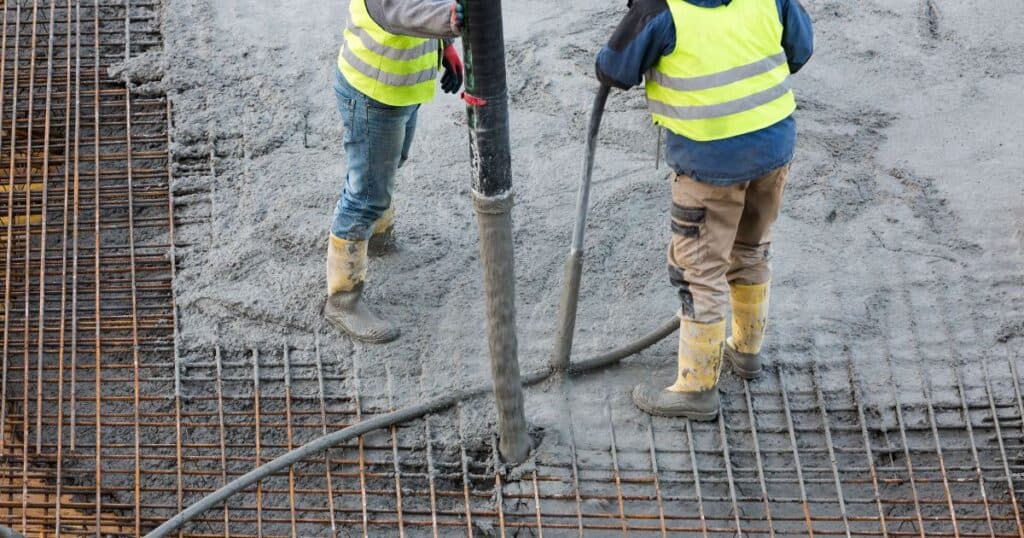
- Transport and laying: Concrete must be transported to the construction site. This is usually done using concrete pumps or concrete trucks.
- Demolition and recycling: For responsible waste management and sustainability, old concrete needs to be demolished and recycled.
As regards norms, which must be followed during the production and application of concrete, it is important to pay attention to:
- Quality: The quality of concrete affects its strength and durability. The quality is determined by the amount of cement and the water ratio (water/cement) in the concrete.
- Environment: The environment in which the concrete will be used affects its selection. For example, the concrete used in foundations should have high strength and load resistance, while the concrete used in the interior could be lighter and less demanding on strength.
- Safety instructions: When working with concrete, safety procedures must be followed, such as wearing protective equipment and avoiding skin contact.

New Technologies and Innovations
They are constantly appearing in the field of concrete new technologies and innovations. These new compounds and processes aim to improve the properties of concrete, its sustainability and ease of use. Some of these innovations include:
- Ultra-high performance concrete (UHPC): This type of concrete has increased strength and durability, which makes it possible to design and build thinner and more elegant structures.
- Concrete that repairs itself: Such concrete contains bacteria that produce limestone when activated by water. In this way, the concrete can repair itself when cracked.
- Ecological concrete: Attempts to produce concrete with a lower cement content and to replace some components with recycled material contribute to reducing CO2 emissions and sustainability.
These new technologies and innovations for concrete as a construction material show that the construction industry is still evolving and trying to set new standards for sustainability and quality.
Aesthetic and Functional Aspects of Concrete
Surface finishes
Concrete is known for its strength and durability as a building material, but it also offers a wide range of aesthetic and functional possibilities. Concrete surface can be customized in a variety of ways to suit your aesthetic and functional needs. One of the most famous modifications is exposed concrete. This material includes special surface treatments that improve its appearance while maintaining the strength and durability of the concrete.
Some common finishes include:
- Smooth surfaces
- Rough surfaces
- Stained concrete
- Special patterns or textures
Use in Architecture
Concrete is becoming a popular element in construction and architecture. Its versatility and aesthetic aspects make concrete an ideal material for designers. It can be used in a wide range of constructions such as buildings, transport infrastructure, civil engineering and more.
Here are some examples of the use of concrete in architecture:
- Facades: Concrete can be used as part of the facade, which contributes to the modern and bold appearance of the building.
- Supporting structures: Concrete is a popular material for load-bearing structures such as columns, beams and foundation structures.
- Public space: Concrete can be used in public spaces such as parks, squares or sidewalks. Its weather resistance and strength ensure the long life of these spaces.
When working with concrete it is important that designer considered the aesthetic and functional aspects of the material and worked closely with construction experts. Proper use and treatment of concrete will allow you to create beautiful, durable and sustainable structures that will serve your needs while also being aesthetically appealing.
FAQs
What are the ingredients and amount of material needed to produce 1 m3 of concrete?
Concrete consists of a mixture of cement, aggregate and water. In addition, additives and admixtures can be added to improve the properties of the concrete. The amount of material required to produce 1 m3 of concrete varies depending on the desired properties of the concrete and the exact ratio of the ingredients. It is usually around 350 kg of cement, 800 kg of coarse aggregate, 600 kg of fine aggregate and 200 liters of water.
What is the minimum time required for proper curing of concrete?
Proper curing of concrete is essential to achieve the required strength. The minimum curing time for concrete is usually 28 days, during which the cement hydration process takes place. Although concrete achieves most of its strength in the first 28 days, the hydration process continues beyond this time.
What are the specifics and uses of high-strength concrete?
High-strength concrete is a type of concrete with higher compressive strength than ordinary concrete. This type of concrete has advantages such as higher durability, increased resistance to water penetration and better wear resistance. High-strength concrete is often used in structures where high strength and long-term durability must be achieved, such as bridges, roads or tall buildings.
What is the consumption of sand in the production of 1 m3 of concrete?
The consumption of sand in the production of 1 m3 of concrete depends on the concrete recipe and on the type and granulometry of the sand. In general, the consumption of fine aggregate (sand) is around 600 kg per 1 m3 of concrete.
What is the main difference between asphalt concrete and frost-resistant concrete?
Asphalt concrete is a mixture of bitumen and aggregate, which is mainly used for the construction and repair of roads and parking lots. Refractory concrete is a mixture of cement, aggregate and admixtures that is conditioned to withstand repeated cycles of freezing and thawing. The main difference lies in the composition and use of both materials.
What is the difference between concrete and cement?
Cement is a powdered mixture that is the basic component of concrete. Cement reacts with water in a process called hydration to form a solid mass. Concrete is a mixture of cement, water and aggregate that hardens into a solid building material. Concrete therefore contains cement, but is enriched with aggregates to increase strength and other properties.